Thursday, July 3, 2014

Have a Happy Fourth of July

Small Animal Independence Day Safety


I am looking forward to spending my first fourth of July with my chickens, ducks and bunnies. I am excited to see how they respond to the sights, sounds and smells. So this got me thinking on how I should prepare my animals and make sure everything goes smoothly. Here is what I found:

  1. Eating Garbage is Bad
    It might be a good idea to set up an exercise pen for your small animals as there will inevitably be tons of fun things for them to inspect, peck at and nibble on. Stray fireworks, wrapper, matches and who knows what will be left on the ground and all about. Unless you are a super crazy cleaner and think you can pick up every dangerous scrap before your chicken tries to attack the shiny on the ground - keep them confined to a debris free area.

  2. Fourth of July = Smoke and Fumes
    Small animals need fresh air, oxygen, ventilation and not to be suffocated with smoke. Make sure your enclosure, pen, coop, is not down wind of your fire pit, firework show or grill.

  3. Plenty of Shade
    I am praying for a hot and sunny Fourth of July so that I can play in the sun, get my tan on and enjoy grilling outside. Remember that small animals are sensitive to heat. Make sure they have plenty of shade and extra water. You don't want to have to check their water in the middle of your firework extravaganza. Also, although this might seem obvious, don't apply any sunscreen or bug repellent to any animal that is not specifically marked for that species.
     

  4. Our Junk Food is Junk for Small Animals Too
    Avoid passing the left overs and scraps to your small animals. While it is cute to see them try new foods, chances are most of your holiday treats will not be good for them and might possibly be toxic. If in doubt, don't feed it to them! Remind your guests too :)

  5. Fireworks are Loud
    This was my main concern when I first thought of fourth of July safety. When I was little we always brought our bunnies inside when there were fireworks or if we knew there was going to be a storm. I was always afraid of my bunnies dying of shock from the loud noises. From what I have read, most chickens don't seem to care. I am still going to keep an eye on them and make sure they don't get too freaked out. I am also going to set off a few small fireworks before anyone arrives (and a little at a time over a few days before the fourth) to get them used to the sudden pops, whistles and bangs.
    *BUNNIES* Bunnies can get very stressed in new situations, which includes loud noises. I recommend bringing your bunnies inside, in a quiet room, away from the festivities. Put on music, or the television to create constant sound. This will give them something to associate the noise with and help them relax. While fireworks and thunderstorms don't often frighten bunnies to death they can die of shock if they get really stressed. Stress can cause a heart attack or gastrointestinal stasis which is a common cause of death in rabbits.

Pictures are Mandatory 
Finally, remember to take pictures. It is necessary, for everyone's happiness, that you take many cheesy Fourth of July pictures of your little critters dressed for the occasion. Here are some of ours, please share yours!
Spider - Always the first to join the fun!


Bromley lookin proud


She loves to perch and puff out her feathers with the good old American Pride! She was great about having the necklaces on but did peck at them a bit.

She sat up on the coop patiently while I took a million pictures of her. She really is such a sweetie. It is nice to have chickens you can do absolutely anything with. She made the task of rounding up the other chickens seem much harder.

I went ahead and let her down to explore and run around with the dogs while I took pictures of the other hens. She was super calm. She investigated a little but mostly just found her way back to the coop and looked longingly through the fence to get back in. 


Bromley and the dogs.

Helen.

Helen got real scary looking when I was dressing her up. She looks almost like a vulture or something.

Road Runner


The Brown Leghorns or as we call them "Road Runners" were hard to catch as usual. They kept jumping up on the edge of the fence to the run. I wouldn't trust them to come back if I let them free in the yard. I decided it would be best to hold them for picture time.
Meeko and Ayden - Easter Eggers


Seraphina - Easter Egger


Seraphina is usually really sweet but you can see she was given me a bit of an attitude. She didn't want anything to do with my props and tried to choke herself with the necklace. I had to dig it out of her feathers and get her claws off it in order to get it off. Then she just stared at the wall, away from the camera. What a brat! She sure knows how to give a dirty look.

Have a super fun and super safe Fourth of July! We will let you know how ours turns out!

Saturday, June 28, 2014

Eggs?

I can't tell you how excited I am for these girls to start laying. We now have 10 hens that are four months old and 3 hens that are a bit younger (well one of those three might be a rooster).

I've read that some hens start laying around four months. So where are my eggs! Okay, I am impatient.
I am looking for anyway to kick start the process. We read that they need more daylight and calcium to lay eggs. Now that they are in their chicken tractor they are getting plenty of daylight (about 13 hours per day) and we are going to change their feed over to layer pellet for higher calcium.

Any other tips? I want to help these girls along and start the laying! We have Buff Orpingtons, Easter Eggers and Brown Leghorns. The younger three are Laced Wyandottes.

We are also needing to choose a material for their nests. Any recommendations?

Wednesday, June 25, 2014

Boy or Girl?

Anyone who has bought straight run chicks knows the anticipation of finding out whether they brought home the gender they were hoping for. Right now we are hoping to have all girls until we are ready to take on the challenge of a rooster. We brought home two straight run Golden Laced Wyandottes and we are noticing some differences in their development. We might have a rooster!


The Hen


The maybe Rooster


Tell us what you think! Is it a roo? They are about 2 months old right now.

Saturday, June 21, 2014

Chicken Tractor Goes Live 6/21/14

Ams/_jTn8-0VE5k/s1600/WP_20140622_065.jpg" imageanchor="1" style="margin-left: 1em; margin-right: 1em;">

Our DIY Chicken Tractor


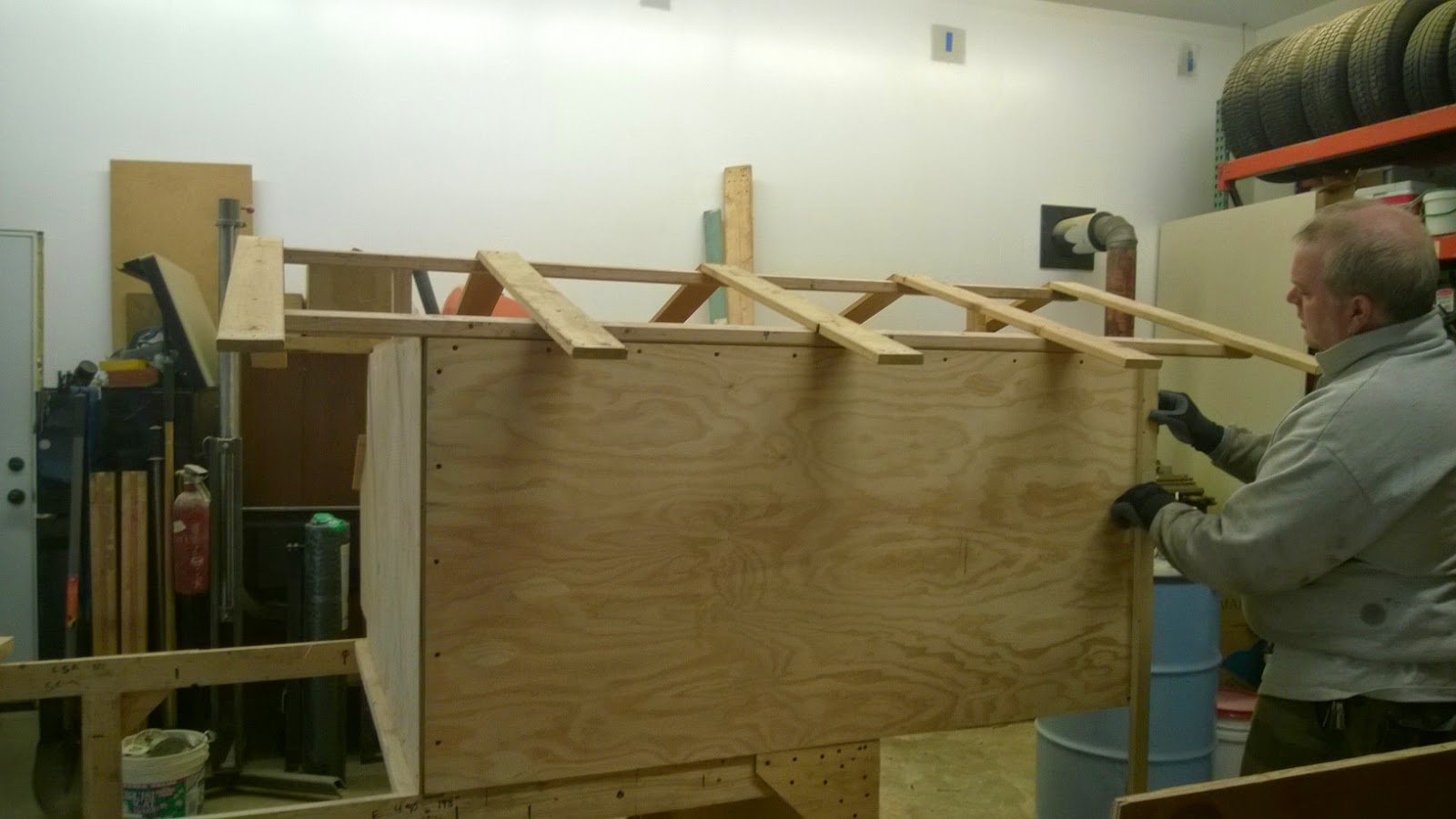
I won't pretend to be a master builder. I would have never been able to accomplish this quality of work without the generous guidance and assistance of my Uncle Scott. He also supplied a lot of the wood and other parts - and of course all the tools! 

Bottom Enclosure

This is the frame of the bottom enclosure. On one end is a set of tires on a rod with a lever. When you flip the lever it jacks the coop up off the ground. Then you lift from the other side and easily wheel the tractor across the lawn. I can lift it by myself!


From the Bottom Up

Here you can see my very favorite part of the coop... the ramp! I'll go ahead and let you in on a secret, it is the only part of the coop that I made all by myself. The men did most of the heavy lifting. The ramp goes from the lower enclosure and up into the coop. At night we will lift the ramp and it will close off the upper coop to keep the hens safe from raccoons and other predators.


Upper Level

Here are some shots of the upper level of the coop. We put on a separate section for the nesting boxes with a lid so we can open it and easily access the eggs. Four nesting boxes should accommodate about 12 hens. We are building the coop for 10 hens so it should be plenty of space. We are installing a perch on the left side for them to roost on. You can see them installing the coop on the lower enclosure. They attached it at just enough point to make a solid sturdy structure but keep it easy to remove for transportation.


Painting

It turns out painting is hard work. This is where I helped out the most. Emjay and I painted for days! In order to waterproof the wood we put two coats of primer on before we even got to the colors. Scott had some primer that he let us use.


We painted it a pale green with a dark magenta trim. Two coats each time!


Roofing

We decided on plastic roofing with space left between the roof and the coop. We figured this would give the chickens plenty of ventilation, keep the rain and wind out, be easiest to clean and would keep the tractor from getting too heavy.


Fencing

We added plastic coated wiring to fence in the lower enclosure. 


Doors

We decided to add two doors for the lower enclosure so that any part of it could be accessed. We went back and forth on where to put the door and finally decided making the whole top a door would give us the most flexibility. 


Final Product

Finally, we added a PVC gravity feeder that we made out of PVC pieces and put their waterer we previously made for their old enclosure. We put bedding in their nesting boxes, moved it out to the grass and put the hens in!


Our goal was to get the hens in their chicken tractor by summer... and with perfect timing, we finished it on the first official day of summer! 

Sunday, June 15, 2014

Happy Father’s Day

Happy Rooster’s Day 
In honor of father’s day I thought we could take a look at how to introduce a rooster to your flock. Right now we have just hens but I hope to one day add some boys to our flock. I am always nervous about predators and feel like a bigger, tougher rooster would be a great addition to our flock’s safety. I’ve also heard that having a rooster around can ease the atmosphere of the flock as they no longer have to be on the lookout all the time. Finally, there is the added bonus of new chicks! I would love to experience this whole process the natural way.


So how do I do it safely?
I have heard stories of aggressive roosters and of hens ganging up on a rooster pecking him aggressively. As much as I would like to add a rooster, I do not want to risk the safety of my hens or put a rooster into a hostile environment.

Choose the right Rooster
You want an older, more mature rooster. A younger rooster is an easy target to an established flock. Find a rooster with an easy going attitude that won’t be a threat to your hens but one that is older and can become a dominant member of the flock. Choose a friendlier breed that will be easy for you to handle and check the rooster for good health.
Before you bring the Rooster home, ask to visit him with is current flock and make sure he is: 
 - Older or similar in age to your flock
-  An easy going rooster that respects his hens
-  Comfortable with people and allows you to hold him
-  Is in good health

Keep your Flock Safe – Quarantine
 Advice on how long to quarantine varies. In my opinion, the longer quarantine the better. I would recommend at least two weeks to assess any new additions to your flock. Keep them in an isolated area where your flock is not able to get to. Even if the new addition looks healthy, it could be carrying something your flock isn’t used to. While they are in quarantine watch them closely for signs of illness or parasites. Many flock raisers recommend 30 days to give time for symptoms to show. This also gives them time to acclimate to the environment. It will be easier for them to take in their new home first and their new family later.

Neutral Territory with Distractions and Obstacles
A separate enclose with plenty of space should be used for short introductions. Provide distractions, such as chicken feed, to keep their attention while they share the same space. Use plenty of a special treat that will help take away the stress, enough of the treat that they don’t feel they have to fight over it. Give them obstacles so they can avoid unwanted attention if someone starts to pick on them. Let them socialize for short periods of time under supervision and remove the newcomer if anyone is too aggressive. There is a fine line between letting them figure it out and letting it go too far. Let the socialization periods become longer as everything goes well.
What is your plan if something goes wrong:
-have extra enclosure to separate chickens
-gloves to help you grab on to an aggressive chicken
-first aid kit to treat any wounds

Take the leap!
When everything looks well you have to take the leap and leave them alone for the night. Generally a mature older rooster will take dominance over a flock of hens smoothly. Aside from some pecking you shouldn’t have too much trouble. If you notice anyone getting picked on you have the extra encounters to separate them.

Please tell me your stories - what was it like when you brought your rooster home?

Friday, June 13, 2014

Burning Egg Shells

Happy Friday the 13th!

Did you know that it is bad luck to burn eggshells on Friday the 13th?

The superstition says it will burn the hens nether regions and she will never lay again!

So skip the eggs today - you don't want to carelessly burn a piece of egg shell and burn your poor hens bottom!

Thursday, June 12, 2014

Throwback Thursday

Chickens have been a prominent part of the everyday home throughout history. While they are seen as a farm animal by many, some of us understand that every home should have a chicken coop! We have learned a lot through this process and overall I would recommend it to anyone! You really do not need a lot of space and they are easy to maintain. Our hens are very low maintenance - its just the chicks that we have to monitor closely. While reading up on different breeds I have seen a lot of interesting history.

Here is a look at our history. Our original babies on day one! I can't believe how much they have grown.